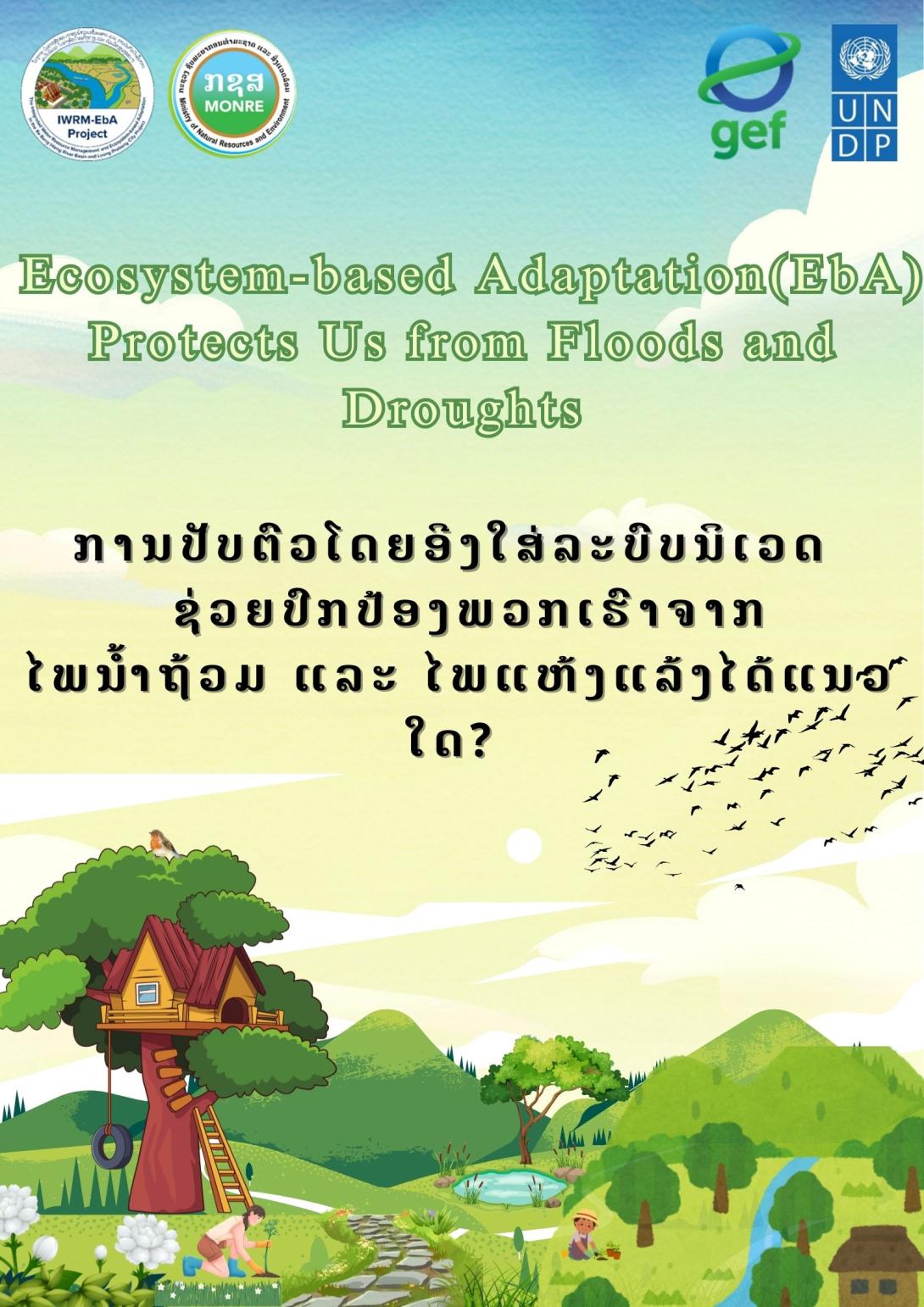
Nature: Our Strongest Ally Against Climate Change
Climate change is no longer a distant threat—it is a daily reality. Communities across the globe, including those in Laos, face increasing risks from floods, droughts, unpredictable rainfall, and extreme weather events. Traditional solutions such as dams, dikes, and reservoirs have played a role in water management, but they are costly, resource-intensive, and often limited in their ability to adapt to future climate uncertainties.
An alternative—and often more powerful—approach lies in working with nature, not against it. This is the essence of Ecosystem-based Adaptation (EbA), which uses healthy ecosystems like forests, wetlands, grasslands, and rivers to buffer the impacts of climate change and build community resilience.
Wetlands: Natural Sponges for Flood and Drought Protection
Take the Xe Bang Hieng River Basin in southern Laos as an example. Its wetlands perform vital ecosystem services that benefit both people and nature. During the rainy season, these wetlands act as natural sponges, absorbing excess rainfall and reducing the severity of downstream flooding. Then, during dry months, the same wetlands slowly release stored water, ensuring that rivers, agriculture, and communities continue to have access to water.
Without these wetlands, floods would be more destructive and droughts more severe—leaving communities vulnerable and food security at risk. Protecting and restoring wetlands is therefore not only an environmental priority but also a social and economic necessity.
Forests and Watersheds: Guardians of Water Security
Healthy forests also play a crucial role. They stabilize soils, reduce erosion, and regulate the flow of water into rivers and reservoirs. In upland areas, deforestation increases runoff and siltation, which can worsen floods in the rainy season and reduce water storage in the dry season. By maintaining forest cover, we secure clean water supplies, fertile soils for farming, and protection against landslides—all essential for climate adaptation.
Smarter, Cheaper, More Sustainable
One of the strongest arguments for EbA is its cost-effectiveness. Building large concrete structures requires enormous financial investment, continuous maintenance, and sometimes even causes ecological harm. In contrast, nature-based solutions often require less upfront investment, provide multiple benefits, and sustain themselves over time.
For example, restoring wetlands and reforesting degraded land does not only reduce climate risks—it also supports biodiversity, boosts ecotourism, improves fisheries, and enhances community livelihoods. These co-benefits make EbA a smarter choice for long-term sustainable development.
EbA: Beyond Conservation, Toward Resilience
It is important to understand that EbA is not “just conservation.” It is a strategic climate adaptation measure that integrates environmental, social, and economic objectives. By incorporating EbA into urban planning, water management policies, and national climate strategies, countries can reduce disaster risks, strengthen community resilience, and align with the Sustainable Development Goals (SDGs).
A Call to Action
Nature is not a passive victim of climate change—it is an active partner in the fight against it. By protecting forests, restoring wetlands, and promoting integrated water resources management (IWRM), we invest in solutions that are resilient, adaptive, and sustainable.
As the saying goes: protecting nature means protecting ourselves. If we fail to safeguard our ecosystems, we lose our first line of defense against climate impacts. But if we invest wisely in EbA, we secure safer, healthier, and more resilient futures for generations to come.
🌍 Nature-based solutions are climate solutions. Let’s put them at the center of our adaptation strategies.
#ClimateAction #ClimateChange #Floods #Droughts #WaterManagement #IWRM #EbA #SustainableDevelopment #Biodiversity #UrbanPlanning #Deforestation #EcosystemProtection #ResilientCommunities #Environment #Sustainability