Image
Project Number
Integrated Water Resource Management and Ecosystem-based Adaptation (EbA) in the Xe Bang Hieng River Basin and Luang Prabang City
Project Status
Finished
Project Date
Project category
Activity 03
Project Area of Work
Component 01: Capacity Building for ICM and UEbA
Project Donor & Co-financing
UNDP/GEF-LDCF
Project Contact Details
For media inquiries, please contact:
Phouphet Chittaphone
Database Analyst and Communication Officer, IWRM-EbA Project
Department of Water Resources, Ministry of Agriculture and Environment
Email: [email protected] Tel: +856-20-5856-2532
Phouphet Chittaphone
Database Analyst and Communication Officer, IWRM-EbA Project
Department of Water Resources, Ministry of Agriculture and Environment
Email: [email protected] Tel: +856-20-5856-2532
Share:

Strengthening National Capacity for Ecosystem-based Wetland Management in Lao PDR
Project Location
KaysonePhomViHane City, Savannakhet Province
Project Description
The Integrated Water Resource Management and Ecosystem-based Adaptation (IWRM-EbA) Project is a national initiative led by the Department of Water Resources (DWR) under the Ministry of Agriculture and Environment, in partnership with the United Nations Development Programme (UNDP), and supported by the Global Environment Facility Least Developed Countries Fund (GEF-LDCF). The project aims to strengthen the climate resilience of vulnerable communities in the Lao People’s Democratic Republic through the integrated and sustainable management of land and water resources, applying ecosystem-based adaptation approaches.
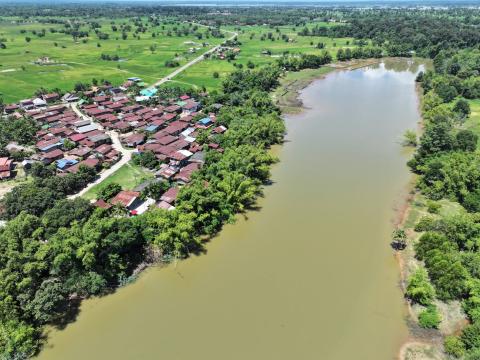
Focusing on priority areas such as the Xe Bang Hieng River Basin in Savannakhet Province and Luang Prabang City, the project supports ecosystem restoration, development of climate-resilient infrastructure, improved water governance systems, and capacity building for both local authorities and communities.
Through close collaboration with government institutions, local communities, and development partners, the IWRM-EbA Project promotes inclusive, participatory, and evidence-based planning to address the impacts of climate change while enhancing livelihoods and environmental sustainability. By aligning with national development priorities and climate adaptation strategies, the project contributes to strengthening resilience, conserving critical ecosystems, and supporting sustainable socio-economic development in targeted areas.
Focusing on priority areas such as the Xe Bang Hieng River Basin in Savannakhet Province and Luang Prabang City, the project supports ecosystem restoration, development of climate-resilient infrastructure, improved water governance systems, and capacity building for both local authorities and communities.
Through close collaboration with government institutions, local communities, and development partners, the IWRM-EbA Project promotes inclusive, participatory, and evidence-based planning to address the impacts of climate change while enhancing livelihoods and environmental sustainability. By aligning with national development priorities and climate adaptation strategies, the project contributes to strengthening resilience, conserving critical ecosystems, and supporting sustainable socio-economic development in targeted areas.
Project Outcomes & Impacts
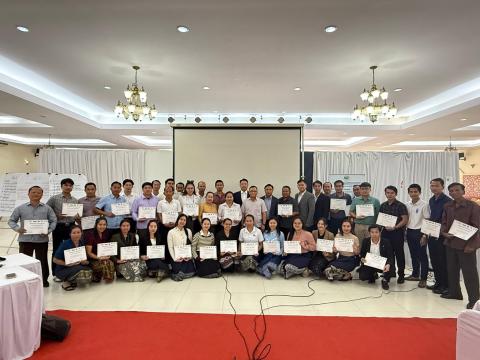
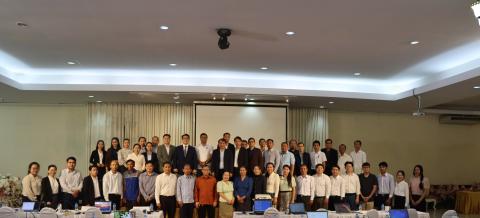
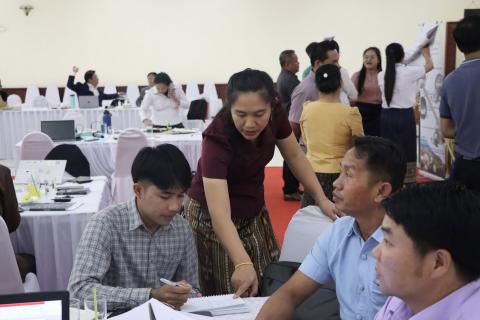
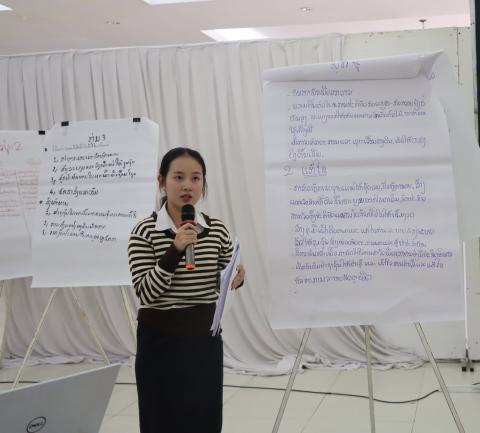
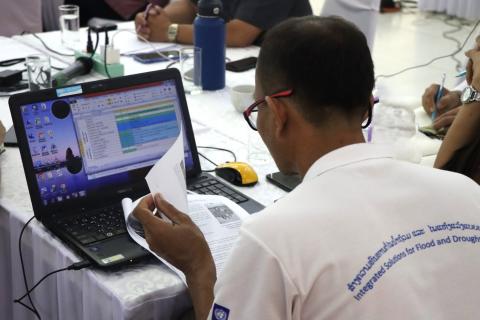
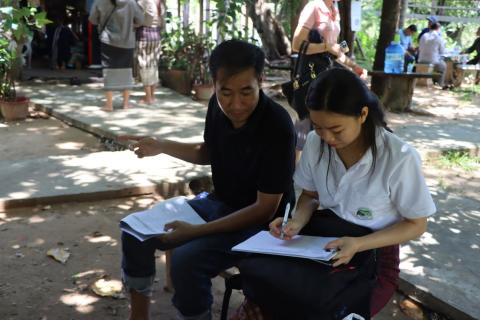
The National Training on Ecosystem-based Wetland Management successfully strengthened the knowledge and technical capacity of more than 50 participants from government agencies, academic institutions, and conservation organizations across Lao PDR. Organized by the Department of Water Resources with support from UNDP Lao PDR and the Ramsar Regional Center – East Asia (RRC-EA), the training provided a platform for enhancing understanding of sustainable wetland management and climate resilience approaches.
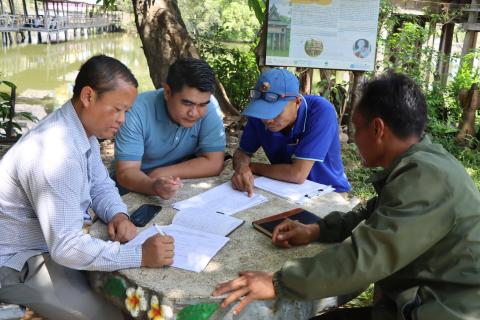
Using the Xe Champhone Ramsar Site as a practical learning case, participants gained hands-on experience in wetland assessment and management tools, including RAWES, R-METT, and WETVAT. The training improved participants’ capacity to apply ecosystem-based approaches for wetland conservation, biodiversity protection, climate adaptation, and sustainable natural resource management.
The activity also strengthened collaboration and knowledge exchange among national and provincial authorities, academic institutions, and conservation partners, fostering a shared understanding of wetland conservation priorities and management challenges. The knowledge and skills acquired through the training will support more effective planning, monitoring, and management of wetlands across Lao PDR, contributing to long-term ecosystem health, biodiversity conservation, and climate-resilient livelihoods for local communities.
The training further contributed to advancing the implementation of Lao PDR’s commitments to wetland conservation and integrated water resource management by promoting the application of internationally recognized tools and best practices. By enhancing the capacity of practitioners and decision-makers to assess ecosystem health, identify conservation priorities, and address climate-related risks, the activity established a stronger foundation for evidence-based decision-making and adaptive wetland management. The strengthened network of stakeholders and technical experts will continue to support knowledge sharing and coordinated action, helping to ensure the sustainable management of wetlands and the delivery of ecosystem services that benefit both people and nature.
Using the Xe Champhone Ramsar Site as a practical learning case, participants gained hands-on experience in wetland assessment and management tools, including RAWES, R-METT, and WETVAT. The training improved participants’ capacity to apply ecosystem-based approaches for wetland conservation, biodiversity protection, climate adaptation, and sustainable natural resource management.
The activity also strengthened collaboration and knowledge exchange among national and provincial authorities, academic institutions, and conservation partners, fostering a shared understanding of wetland conservation priorities and management challenges. The knowledge and skills acquired through the training will support more effective planning, monitoring, and management of wetlands across Lao PDR, contributing to long-term ecosystem health, biodiversity conservation, and climate-resilient livelihoods for local communities.
The training further contributed to advancing the implementation of Lao PDR’s commitments to wetland conservation and integrated water resource management by promoting the application of internationally recognized tools and best practices. By enhancing the capacity of practitioners and decision-makers to assess ecosystem health, identify conservation priorities, and address climate-related risks, the activity established a stronger foundation for evidence-based decision-making and adaptive wetland management. The strengthened network of stakeholders and technical experts will continue to support knowledge sharing and coordinated action, helping to ensure the sustainable management of wetlands and the delivery of ecosystem services that benefit both people and nature.
Project Media & Reports
Image
Image
Image
Image
Image
Image
Image
Image
Image