Image
Project Number
Integrated Water Resource Management and Ecosystem-based Adaptation (EbA) in the Xe Bang Hieng River Basin and Luang Prabang City
Project Status
On-going
Project Date
Project category
Activity 02
Project Area of Work
Component 02: Implementation of EbA and CRM
Project Donor & Co-financing
UNDP/GEF-LDCF
Project Contact Details
For media inquiries, please contact:
Phouphet Chittaphone
Database Analyst and Communication Officer, IWRM-EbA Project
Department of Water Resources, Ministry of Agriculture and Environment
Email: [email protected] Tel: +856-20-5856-2532
Phouphet Chittaphone
Database Analyst and Communication Officer, IWRM-EbA Project
Department of Water Resources, Ministry of Agriculture and Environment
Email: [email protected] Tel: +856-20-5856-2532
Share:
Building Resilience in the Xe Bang Hieng River Basin: Empowering Savannakhet Communities Through Comprehensive Livestock Training
Project Location
Xonnabouly district: (MeungHong Village)
Nong District: (TangAlaiNeua Village and Saveu Village)
Xepone District: (KeangHuaPa and Keagthamae Village)
Nong District: (TangAlaiNeua Village and Saveu Village)
Xepone District: (KeangHuaPa and Keagthamae Village)
Project Description
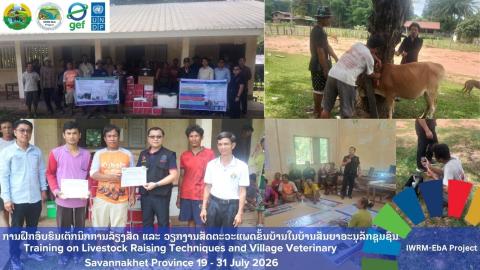
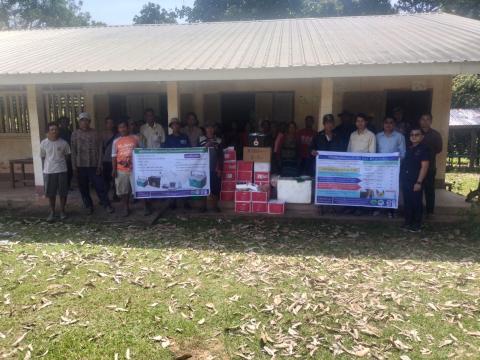
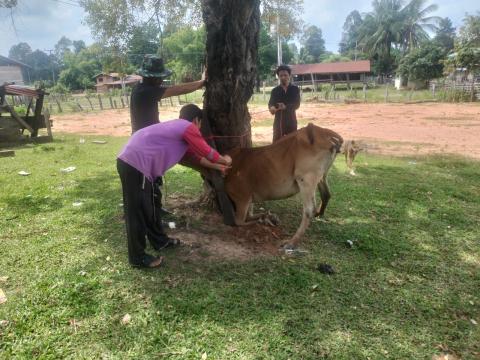
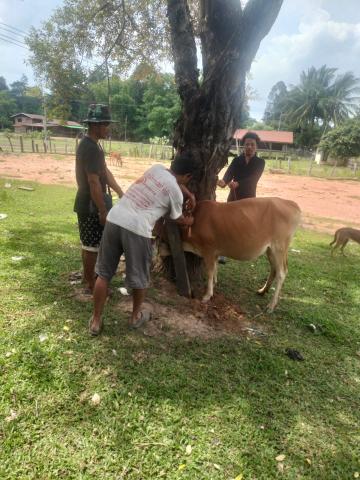
To safeguard rural agricultural livelihoods and strengthen long-term community capacity against environmental and biological threats, the Department of Water Resources, in close collaboration with the Agriculture and Environment Office and local authorities, is conducting a comprehensive Training on Livestock Raising Techniques and Village Veterinary Work. Running through July 31, this intensive initiative targets five highly vulnerable villages across the Chonnabouly, Nong, and Sepon districts in Savannakhet Province. Savannakhet's rural communities, many of which reside within the critical Xe Bang Hieng River Basin, are heavily dependent on agriculture and natural resources, making them particularly susceptible to the dual threats of prolonged drought and unexpected flooding.
The training program actively engages more than 260 local villagers and village veterinarians in practical, hands-on workshops tailored specifically to the environmental realities of local farming. Rather than relying solely on classroom theory, participants learn vital skills to modernize and protect their farming practices through improved livestock management, which includes mastering best practices for breeding, housing, and the daily care necessary to keep herds resilient in fluctuating climates. The training deeply emphasizes hygiene and sanitation, teaching farmers how to maintain clean, secure environments that naturally deter pathogens and limit the transmission of viruses. Alongside this, instructors provide localized, cost-effective strategies for reducing feed costs—ensuring that animals remain sustainably nourished even during severe dry periods when traditional grazing land becomes scarce. Crucially, the curriculum focuses heavily on proactive disease prevention. Farmers are taught how to identify early clinical warning signs, safely quarantine affected animals, and prevent major biological threats, with a specific focus on eradicating Foot-and-Mouth Disease (FMD) and Lumpy Skin Disease (LSD), both of which have historically devastated local herds and erased years of economic progress.
This community-level activity is a core, on-the-ground component of the broader Integrated Water Resources Management and Ecosystem-based Adaptation Project (IWRM-EbA). Recognizing that agricultural security and environmental health are deeply interconnected, the project is implemented in partnership with the United Nations Development Programme (UNDP) and generously funded by the Global Environment Facility (GEF). By integrating sustainable ecosystem management with practical agricultural training, the initiative ensures that human development does not come at the cost of the environment.
The training program actively engages more than 260 local villagers and village veterinarians in practical, hands-on workshops tailored specifically to the environmental realities of local farming. Rather than relying solely on classroom theory, participants learn vital skills to modernize and protect their farming practices through improved livestock management, which includes mastering best practices for breeding, housing, and the daily care necessary to keep herds resilient in fluctuating climates. The training deeply emphasizes hygiene and sanitation, teaching farmers how to maintain clean, secure environments that naturally deter pathogens and limit the transmission of viruses. Alongside this, instructors provide localized, cost-effective strategies for reducing feed costs—ensuring that animals remain sustainably nourished even during severe dry periods when traditional grazing land becomes scarce. Crucially, the curriculum focuses heavily on proactive disease prevention. Farmers are taught how to identify early clinical warning signs, safely quarantine affected animals, and prevent major biological threats, with a specific focus on eradicating Foot-and-Mouth Disease (FMD) and Lumpy Skin Disease (LSD), both of which have historically devastated local herds and erased years of economic progress.
This community-level activity is a core, on-the-ground component of the broader Integrated Water Resources Management and Ecosystem-based Adaptation Project (IWRM-EbA). Recognizing that agricultural security and environmental health are deeply interconnected, the project is implemented in partnership with the United Nations Development Programme (UNDP) and generously funded by the Global Environment Facility (GEF). By integrating sustainable ecosystem management with practical agricultural training, the initiative ensures that human development does not come at the cost of the environment.
Project Outcomes & Impacts
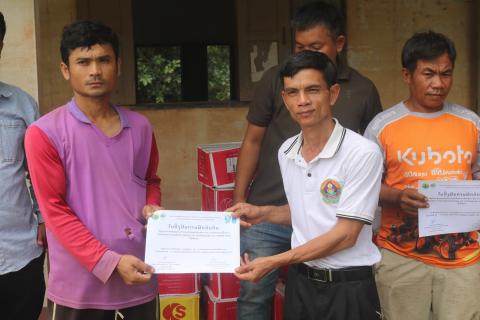
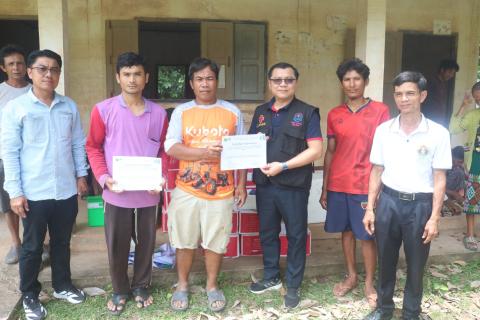
The IWRM-EbA livestock initiative is specifically designed to move far beyond temporary relief, creating immediate, tangible benefits while laying the groundwork for long-term regional stability. By decentralizing animal healthcare, the project equips local village veterinarians with specialized veterinary kits and essential vaccines, transforming them into a continuous, on-the-ground resource for their neighbors. Armed with these new diagnostic tools and medical supplies, communities are now empowered to dramatically improve local disease surveillance. They can quickly identify the first signs of illnesses like FMD or LSD and mount a rapid, coordinated response the moment an outbreak is suspected, effectively isolating the threat and preventing widespread herd loss.
Beyond immediate medical interventions, the project drives long-term resilience by teaching climate-adaptive agricultural practices. By helping farmers reduce feed costs and manage herds during droughts, the initiative directly addresses the climate vulnerabilities unique to the Xe Bang Hieng River Basin. This ability to sustain livestock through poor environmental conditions directly translates into strengthened food security and a more reliable, nutrient-dense food source that insulates villages against both extreme weather and national economic shifts. Ultimately, because livestock often serves as a rural family's primary financial safety net, mitigating the devastation of animal diseases and lowering the overhead costs of feed protects these vital assets. This comprehensive approach helps families build highly sustainable, climate-resilient livelihoods that will secure their economic futures for generations to come.
Beyond immediate medical interventions, the project drives long-term resilience by teaching climate-adaptive agricultural practices. By helping farmers reduce feed costs and manage herds during droughts, the initiative directly addresses the climate vulnerabilities unique to the Xe Bang Hieng River Basin. This ability to sustain livestock through poor environmental conditions directly translates into strengthened food security and a more reliable, nutrient-dense food source that insulates villages against both extreme weather and national economic shifts. Ultimately, because livestock often serves as a rural family's primary financial safety net, mitigating the devastation of animal diseases and lowering the overhead costs of feed protects these vital assets. This comprehensive approach helps families build highly sustainable, climate-resilient livelihoods that will secure their economic futures for generations to come.
Project Media & Reports
Image
Image
Image
Image
Image