The project focuses on enhancing community resilience and sustainable management of natural resources in Lao PDR through Ecosystem-based Adaptation (EbA) practices. Key activities include organizing an inception workshop within 60 days of GEF CEO endorsement to align stakeholders and finalize project plans. Following this, a series of capacity-building training sessions will be conducted for local authorities and communities to strengthen their knowledge of Integrated Coastal Management (ICM) and EbA practices. Additionally, the project will implement ecosystem interventions such as reforestation and wetland restoration to improve environmental resilience. Regular monitoring and evaluation will be conducted to track progress and ensure project objectives are met. Throughout the project, ongoing stakeholder engagement will ensure inclusive participation and integration of local perspectives into all activities, promoting long-term sustainability and successful implementation.
ການສ້າງຄວາມເຂັ້ມແຂງໃນລຸ່ມແມ່ນໍ້າເຊບັງຫຽງ: ການຍົກລະດັບຄວາມສາມາດໃຫ້ແກ່ຊຸມຊົນແຂວງສະຫວັນນະເຂດຜ່ານການຝຶກອົບຮົມການລ້ຽງສັດແບບຮອບດ້ານ
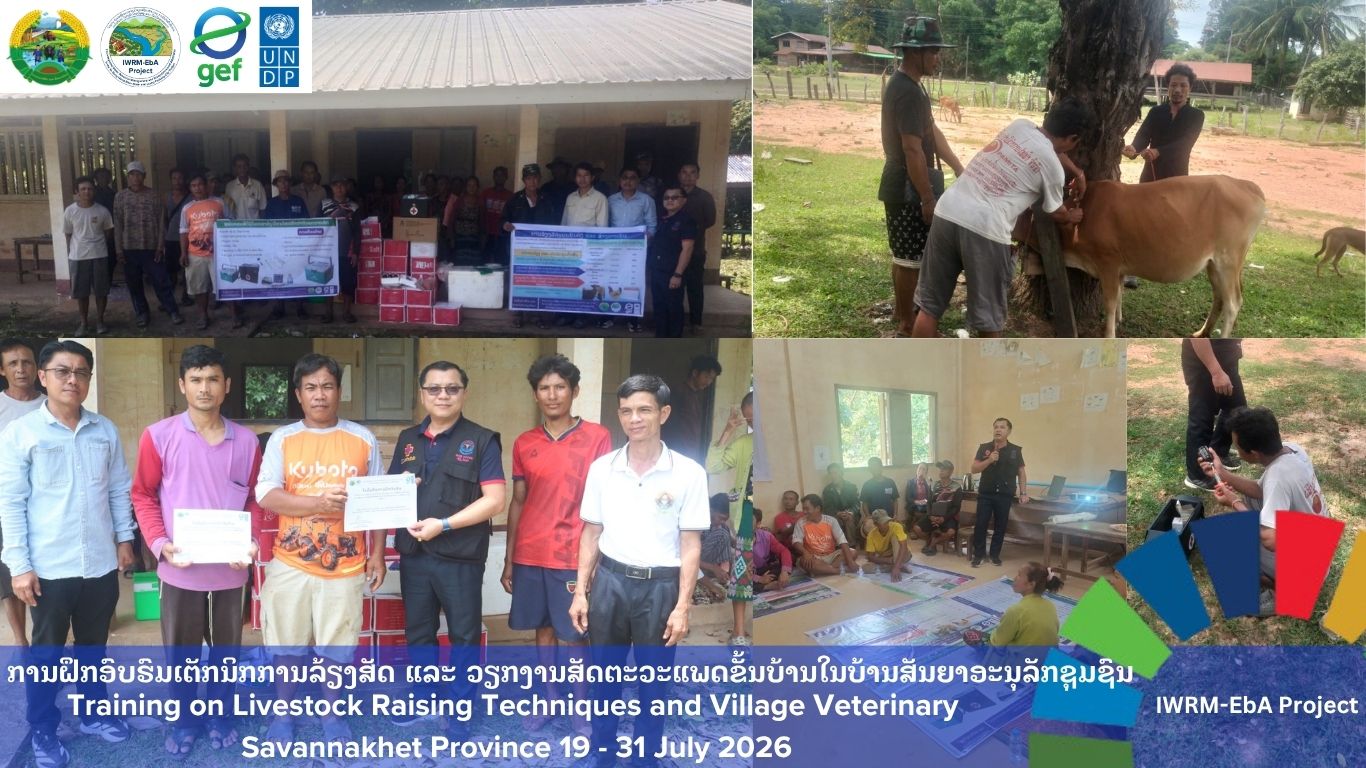
ເພື່ອປົກປ້ອງຊີວິດການເປັນຢູ່ທາງດ້ານການກະສິກຳໃນຊົນນະບົດ ແລະ ເສີມຂະຫຍາຍຄວາມສາມາດຂອງຊຸມຊົນໃນໄລຍະຍາວຕໍ່ກັບໄພຂົ່ມຂູ່ທາງດ້ານສິ່ງແວດລ້ອມ ແລະ ຊີວະພາບ, ກົມຊັບພະຍາກອນນໍ້າ, ຮ່ວມມືຢ່າງໃກ້ຊິດກັບຫ້ອງການກະສິກຳ ແລະ ສິ່ງແວດລ້ອມ ພ້ອມດ້ວຍອຳນາດການປົກຄອງທ້ອງຖິ່ນ, ໄດ້ຈັດຊຸດຝຶກອົບຮົມ "ເຕັກນິກການລ້ຽງສັດ ແລະ ວຽກງານສັດຕະວະແພດບ້ານ" ຢ່າງຮອບດ້ານ. ໂຄງການດັ່ງກ່າວນີ້ ໄດ້ຈັດຕັ້ງປະຕິບັດຈົນຮອດວັນທີ 31 ກໍລະກົດ, ໂດຍແນໃສ່ 5 ບ້ານທີ່ມີຄວາມສ່ຽງສູງໃນເມືອງເປົ້າຫມາຍ (ໝາຍເຖິງ ຊົນນະບົດໃນເຂດເປົ້າໝາຍ), ເມືອງນອງ ແລະ ເມືອງເຊໂປນ ແຂວງສະຫວັນນະເຂດ. ຊຸມຊົນຊົນນະບົດໃນແຂວງສະຫວັນນະເຂດ, ເຊິ່ງສ່ວນໃຫຍ່ອາໄສຢູ່ໃນລຸ່ມແມ່ນໍ້າເຊບັງຫຽງທີ່ສຳຄັນ, ທີ່ຕ້ອງເພິ່ງພາອາໄສການກະສິກຳ ແລະ ຊັບພະຍາກອນທຳມະຊາດ, ເຮັດໃຫ້ພວກເຂົາມີຄວາມສ່ຽງສູງຕໍ່ໄພຂົ່ມຂູ່ສອງດ້ານ ຄື: ໄພແຫ້ງແລ້ງເປັນເວລາດົນ ແລະ ໄພນ້ຳຖ້ວມທີ່ບໍ່ຄາດຄິດ.
ໂຄງການຝຶກອົບຮົມດັ່ງກ່າວ ໄດ້ດຶງດູດການມີສ່ວນຮ່ວມຢ່າງຕັ້ງໜ້າຈາກຊາວບ້ານ ແລະ ສັດຕະວະແພດບ້ານຫຼາຍກວ່າ 260 ຄົນ ຜ່ານກອງປະຊຸມຝຶກອົບຮົມແບບປະຕິບັດຕົວຈິງ ເຊິ່ງຖືກອອກແບບມາໃຫ້ສອດຄ່ອງກັບຄວາມເປັນຈິງທາງດ້ານສິ່ງແວດລ້ອມຂອງການກະສິກອນທ້ອງຖິ່ນ. ແທນທີ່ຈະເພິ່ງພາແຕ່ທິດສະດີໃນຫ້ອງຮຽນເທົ່ານັ້ນ, ຜູ້ເຂົ້າຮ່ວມໄດ້ຮຽນຮູ້ທັກສະທີ່ສຳຄັນເພື່ອຫັນເປັນທັນສະໄໝ ແລະ ປົກປ້ອງການປະຕິບັດງານດ້ານການກະສິກອນຂອງພວກເຂົາ